Search by region
















UK

Europe

Middle East

USA

Asia


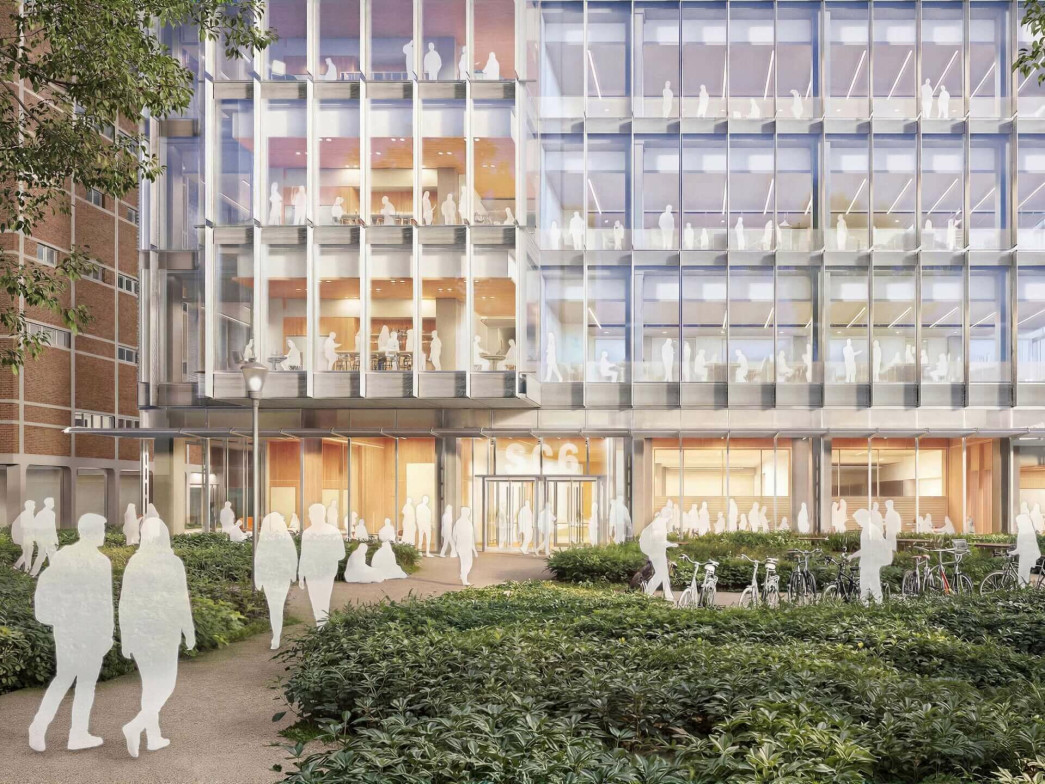
Now open, the Stephen A. Schwarzman Centre for the Humanities marks a step-change for Oxford, consolidating the Humanities into a critical mass of teaching, research, and outreach. For the city, it introduces within the building, a new public “street” and a major cultural venue, embodying collaboration as a foundation of its design.
Oxford’s global reputation in the Humanities drove the project’s ambition: to enhance models of learning, while embracing environmental and social sustainability and inclusivity. The Centre is certified as England’s largest Passivhaus scheme and the world’s first Passivhaus Concert Hall.
The brief was shaped through extensive consultation with academics, librarians, students and staff. Previously dispersed across 26 buildings, seven Humanities faculties, six Bodleian libraries, the Oxford Internet Institute, and a new Institute for Ethics in AI are now united in a central location opposite the Radcliffe Observatory. This physical academic proximity was specifically designed to encourage interdisciplinarity and collaboration.
At the heart of this drive across both academe and outreach is the Humanities Cultural Programme, centred on a world-class 500-seat Concert Hall, three other performance venues, and exhibition and film spaces. This creates a virtuous cycle of “research as performance” and “performance as research,” strengthening ties between University and City.
The design prioritises openness. The public route through the building avoids conventional barriers to entry and is punctuated by public spaces of differing scale and character. At its centre lies the Great Hall, a four-storey atrium with faculty entrances at its cardinal points, study carrels above, and a domed timber-and-glass skylight bringing light into the space. Flexible enough for exhibitions, lectures, performances, or banquets, it resonates with Oxford’s tradition of civic “rooms”, and recalls Hawksmoor’s original vision of a Forum Universitatis.
The building’s scale is modulated by a composition of smaller Clipsham stone and brick blocks, recalling a contemporary response to historic collegiate materiality that balance modern prefabrication techniques with tactility and gravitas.
Advanced modern methods of construction provided both speed and quality, while BIM and VR tools ensured precision across the design team, contractor, and supply chain, embedding the golden threads of fire safety, sustainability, and regulatory compliance.

Professor William Whyte, Professor of Architectural History at the University of Oxford


The Schwarzman Centre for the Humanities has officially achieved certification to the Passivhaus building standard for very-low-energy construction. It is the largest Passivhaus certified university building in Europe and the world’s first Passivhaus concert hall. Receiving this certification requires exceptional levels of performance across multiple criteria, including insulation, airtightness, manufacture, heating and cooling, energy, glazing and ventilation.
To accomplish the projects' insulation, airtightness and programme goals the external envelope is fully panelised and prefabricated. A custom quality management process was developed to verify and record construction integrity at every stage of installation. Early performance monitoring over this winter has already demonstrated that the centre’s heating system requires approximately half the energy of similar non-Passivhaus buildings on a pro rata basis.
Lazlo Lepp, Director of the Passivhaus Institute


Site Plan

Basement Plan

Level 1 Plan