Search by region
















UK

Europe

Middle East

USA

Asia


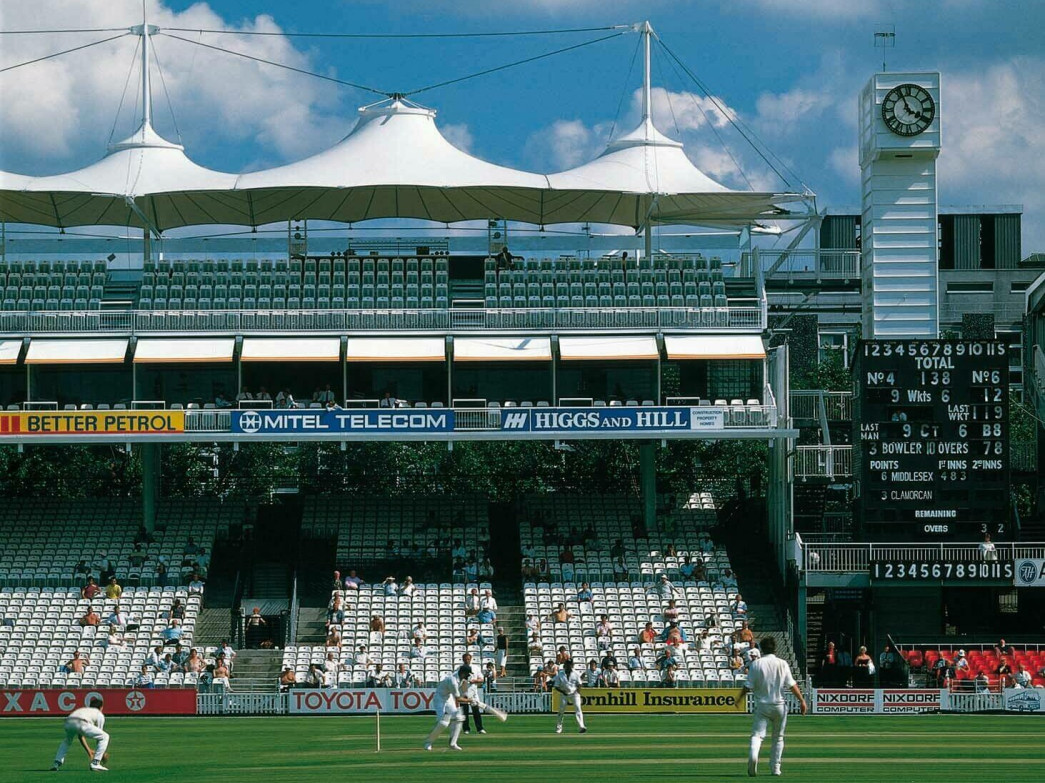
When we were first approached about the design of a new Stand at Lord’s Cricket Ground in 1985, Michael Hopkins described a key difference between cricket and football: during a football match, the spectator sits and leans forward, anxious not to miss a single second of action; during a cricket match, the spectator sits back as the ball makes its way from fielder to fielder, ending up with the bowler, who then begins his run-up.
This fundamental, almost ergonomic, understanding of cricket becomes reflected in an overall appreciation of how cricket “grounds” (not stadia) have traditionally been conceptualised and constituted. Rather than intensifying the focus that a fully enclosed stadium would foster, the cricket ground has typically comprised a collection of stands, each one added as required and thus with gaps and views between them. These gaps allow the eye to wander more extensively, with views of life outside the ground, rather than just the spectators on the other side.
The Mound at Lord’s is one of these stands, originally a simply roofed mound of earth, which presented the opportunity for an increase in spectator numbers and type of accommodation. Our approach was quasi-archaeological, revisiting the original design of arches supporting the tiered seating, and extending these to form a new rear spectator passageway with excellent engagement with the street. Through this increased lower terracing we threaded a new modular and prefabricated superstructure of hospitality boxes and debenture seats, designed to be inserted in the cricket off-season to minimise interruption to match fixtures and provide shelter and shade on hot days. Recalling the origins of cricket as a game played on the village green, a tensile membrane roof canopy covering the top-level seating calls to mind the traditional beer tent, which would have been a focal element of any match.
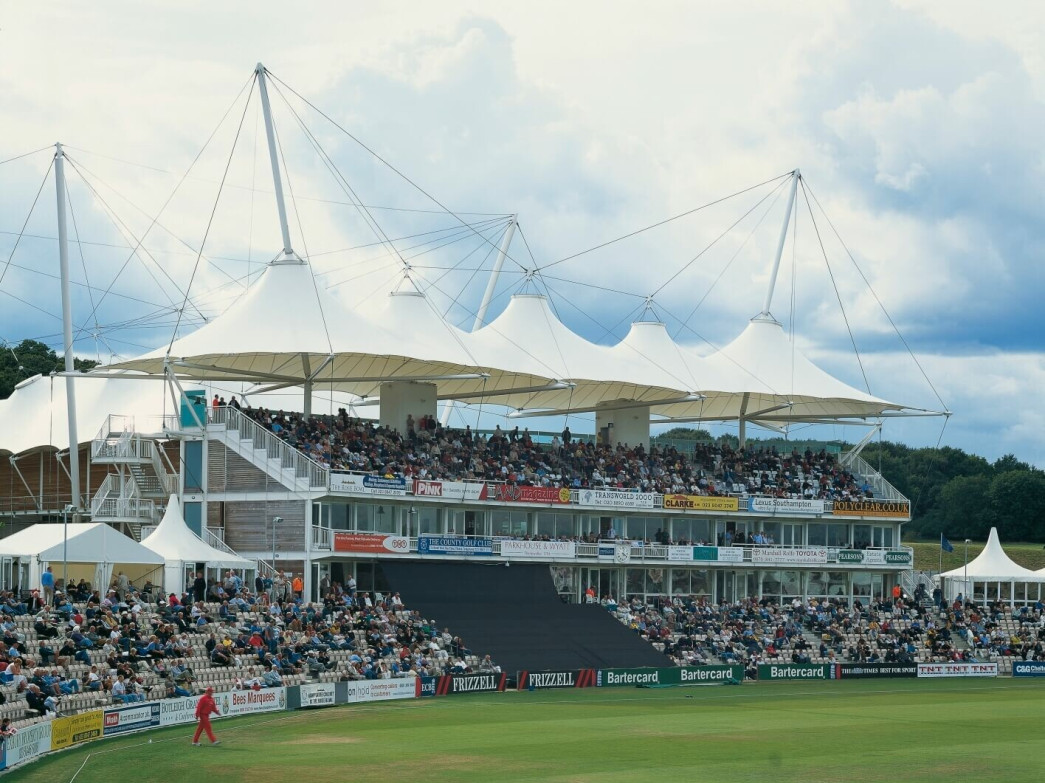
The pace of cricket, especially the five-day game, is varied and, therefore, allows for a kind of perambulation not necessarily available to other sports. At Hampshire County Cricket Club, the ground was conceived of as a sunken bowl around the rim of which spectators could stroll in conversation, still able to catch important match moments whilst enjoying the long-distance views across the county.

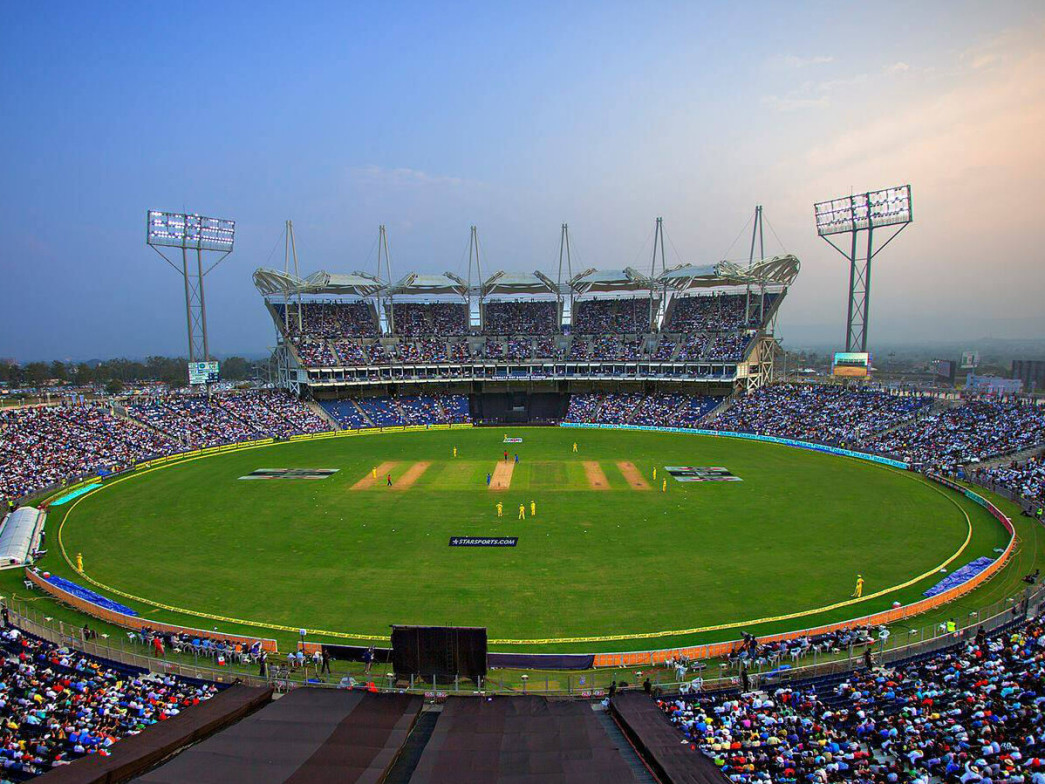
The importance of cricket in India simply cannot be overstated, acting as a social binder at every level and drawing huge and passionate crowds. At Pune, we supersized the sunken bowl concept, creating a concentric podium of circulation. As straight down or perpendicular to the pitch or wicket are the optimum viewing positions, we positioned stands, again in the model of the Mound Stand but at a larger scale, at the cardinal points. The southern end houses the Members’ Pavilion, with a deep lower terrace surmounted by hospitality boxes and steeply sloping upper terrace seating under a steel and tensile fabric roof to provide shading in the intense sun.
The advent of the Indian Premier League, in particular, brought the need for HDTV and, with it, excellent lighting. The ability to replay is now fully embedded in sports, and thus, powerful lighting arrays and large electronic screens were considered part of the design from the outset.
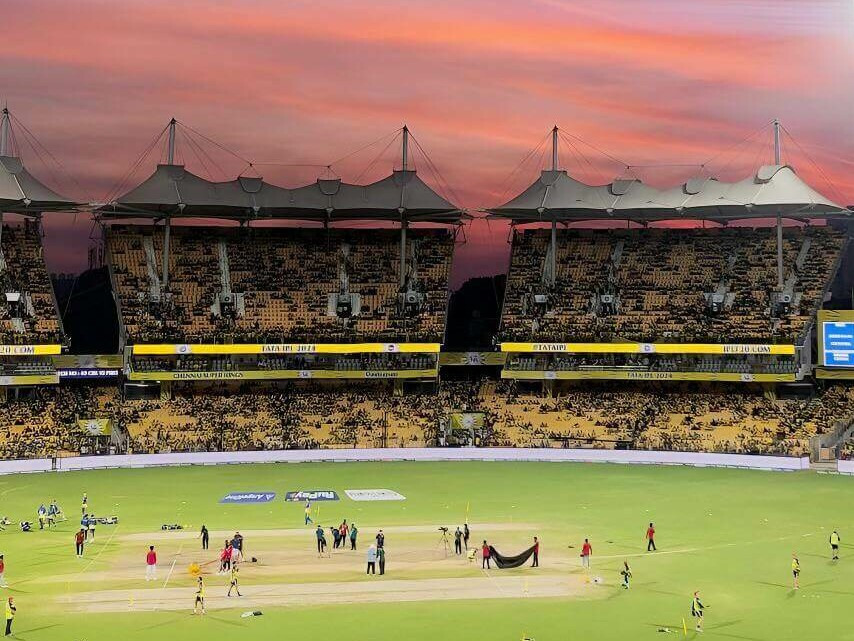
Understanding the interplay between geography, climate and how cricket is played is critical to making a ground work locally. Chennai, located close to the sea, presented specific cricketing issues. The sea-breeze allegedly contributes to that mysterious aspect of cricket called “swing”, for which the stadium is (in)famous. Consequently, although there was a need to increase spectator numbers at the ground significantly, the stand concept was once again deployed rather than an all-enclosing stadium, creating important gaps for the breeze to enter and cross the ground.
The increasing number of formats in the game, including T20 and the Hundred, in addition to the traditional formats of Test Matches and One Day Internationals, reflects the way in which cricket has transformed its offer. Cheerleaders, fanfares, and the impact of television have changed the way the game is perceived, making it much more of a spectacle or event. Whilst the purists might bemoan this, it does open the game up to new audiences who will see greater similarities with other ball sports that they might enjoy, whether this be baseball, football or NFL.

Following on from this, even in its shorter forms, cricket is a game which takes time. This creates opportunities for other forms of entertainment to be intertwined with it, and the ability to further commercialise the day for spectators. Design therefore needs to think about how to incorporate other sorts of space within the body of the ground, and how this could be energised to help support the communities which neighbour the venue.
As cricket continues to grow in popularity, more countries are now playing the sport and/or looking to expand their current franchises. With the arrival of the European T20 Premier League in July this year, and plans to expand T2O in the US, the need for development of new grounds and stadia is inevitable.
Designers will need to be flexible in terms of thinking about cricket in those emerging markets, especially in regions without a year-round cricket culture: how can climatic challenges be addressed without losing the spirit of the game? could those spaces be leveraged for conference or music use? Should we be thinking about temporary and modular stands with retractable shading and canopies? Could the culture of the tailgate, where barbecues and socialising take place both before and after the match, become a central part of the cricket experience? These and many other ideas will need to underpin how we design cricketing venues of the future. We are intensely excited for the future of the game.
